
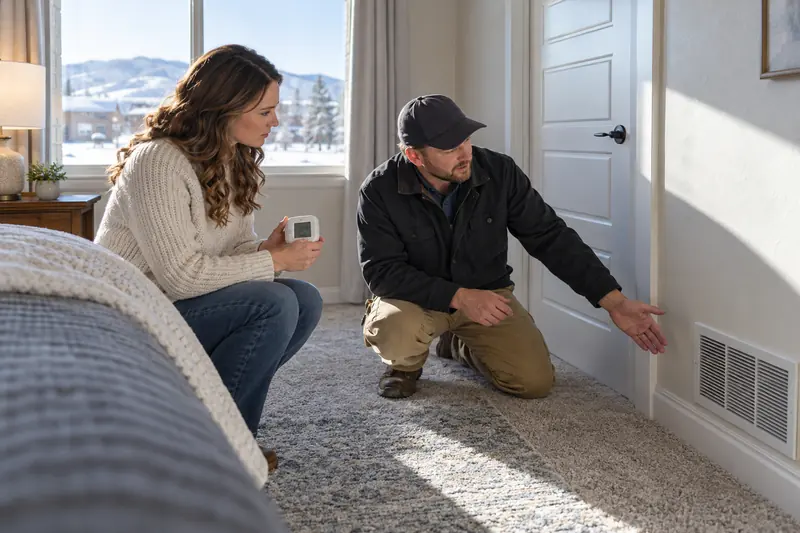
Compare rooms before assuming a furnace fault
Note which rooms are affected, when the difference is most noticeable and whether air comes from the registers. Check that visible vents are not blocked by furniture. Avoid closing many registers to force air elsewhere; that can change system airflow. Tell the provider whether the problem appeared suddenly or has always been present.
What might an assessment cover?
A provider may consider duct connections, return-air pathways, filter condition, thermostat location and the heating load of the room. Windows, insulation and air leakage can also affect comfort. A single larger furnace is not a substitute for identifying why heat is not reaching the space.
Questions for a proposed fix
Ask what evidence points to the cause and whether the suggested work addresses the room's actual heat loss or airflow. If a new furnace is being proposed, request an explanation of how it will be sized and whether the duct system can support it. Read our replacement page for the full installation discussion.
If every room is cold, begin with furnace not heating instead.
Questions homeowners ask
Will a new furnace fix one cold bedroom?
Not necessarily. Ductwork, return air, controls, insulation or room heat loss may still cause uneven temperatures.
Is one cold room a furnace emergency?
Not by itself. If the entire home loses heat, a safety alarm sounds, or another urgent symptom appears, respond to that specific condition.
Optional homeowner tools to compare
These optional tools can help you keep records or make simple, safe observations. They are not substitutes for a qualified furnace assessment, and no product purchase is needed to contact an independent provider.
As an Amazon Associate I earn from qualifying purchases. Product images are AI-generated illustrations of product categories, not photos of particular Amazon listings. Prices, product features and availability are determined by Amazon or its sellers.
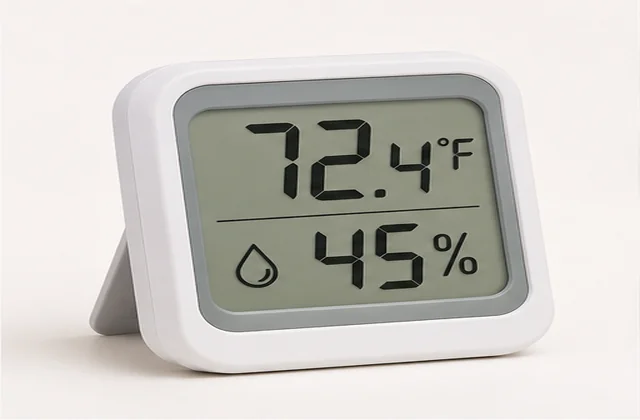
Room thermometer and hygrometer
Compare temperatures in occupied rooms to describe uneven heating more precisely.
Compare on Amazon (paid link)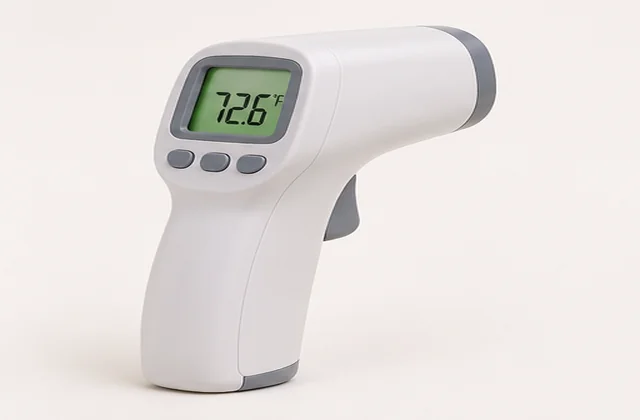
Non-contact infrared thermometer
Compare accessible surface temperatures; surface readings do not diagnose duct or furnace faults.
Compare on Amazon (paid link)If you smell gas, suspect carbon monoxide, or hear a CO alarm, leave the area and follow emergency guidance. Never bypass furnace safety controls.