
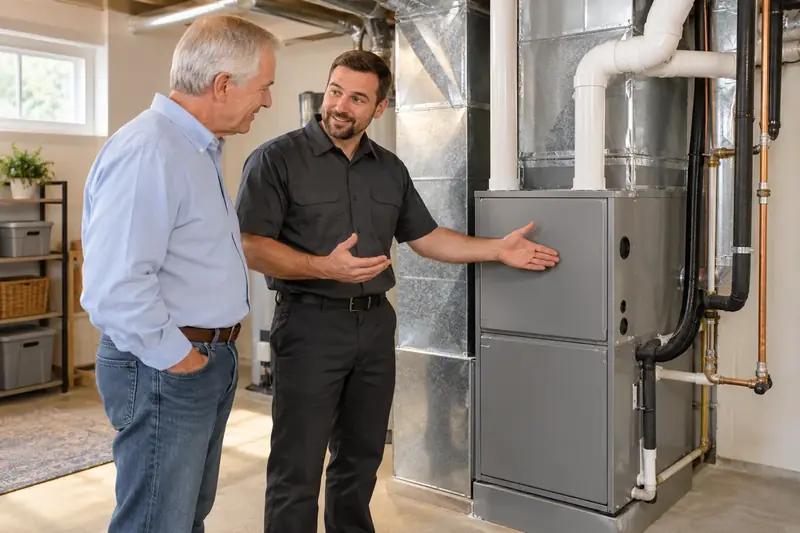
Replacement starts with the existing system
Furnace replacement means more than swapping the cabinet. A provider evaluates the current equipment, the home’s heating needs and the connections that a new unit would require. Repeated breakdowns, poor heating performance or a major defect can prompt the discussion, but age alone is not a diagnosis.
For a new fault, start with furnace repair help in Pocatello. An assessment can establish whether a repair is appropriate before you consider a replacement.
Questions that help compare the options
- What exactly failed, and can a repair address the underlying cause?
- Does the furnace have a pattern of recurring problems?
- How will the replacement be sized for the property?
- Are the existing ducts, venting and controls compatible?
- What work, permits and inspections would the installation require?
Gas and electric furnaces have different installation requirements. A change of fuel type or equipment configuration can involve additional property work. Ask the provider to explain suitability for your home, rather than choosing by cabinet size or replacing like-for-like without evaluation.
Sizing, airflow and efficiency
Heating capacity should match the home’s load. Oversizing can affect cycling and comfort, while distribution problems can persist even after installing a new furnace. The provider may need to evaluate duct connections, return airflow and thermostat controls as part of the recommendation.
Equipment efficiency is one consideration, alongside the installation and the condition of the home. Do not assume a particular energy saving or outcome. If your current system cycles repeatedly or blows cold air, describe those symptoms during the assessment.
Pocatello permits and the installation conversation
The City of Pocatello publishes a mechanical permit process and appliance categories. Ask the provider to confirm the requirements for your specific address and scope, arrange required permits and explain the inspection process. Nearby properties may be in a different jurisdiction.
Discuss removal of the existing unit, access to the utility area, venting and electrical connections, thermostat compatibility and how the completed system will be checked. Confirm the scope and any charges with the provider before authorizing work.
When is a repair still reasonable?
A furnace's age is one clue, not a deadline. Even a 23-year-old system needs an assessment of its present condition, the specific fault, prior repairs and safe operation. Ask which component failed and whether repairing it addresses the underlying problem. Repeated breakdowns, rising utility use or an unsuitable installation may make replacement worth discussing, but a single symptom does not settle the choice.
Rules of thumb such as the “$5,000 rule” omit important details about the home, installation and actual diagnostic finding. Use them as questions for a qualified provider, not as a substitute for a written scope.
For broader decision factors, see ENERGY STAR's replacement guidance.
What affects the replacement scope?
Home size alone cannot select a furnace or establish its installed cost. For example, two 2,000-square-foot homes can have different heat loss, insulation, ductwork and venting. Ask how the provider will size the equipment and whether the proposal includes removal of the old unit, compatible controls, electrical or gas connections, venting, permits, inspection and startup testing.
From assessment to working heat
A replacement typically starts with an evaluation and a proposed equipment and installation scope. After you agree directly with the provider, the work may include removing the old furnace, adapting connections, installing the new equipment and checking its operation. The exact sequence and timing depend on the home and jurisdiction; confirm them before authorizing work.
If one room stays cold, the furnace is not always the sole cause. Read our uneven heating guide before assuming a larger unit is the answer.
Replacement questions
Is a repair always better than replacement?
No single rule fits every furnace. Condition, the fault, installation suitability and previous repairs all matter. Ask the provider to explain both options when relevant.
Can you tell me which furnace to buy?
Furnace Connect does not size, sell or install equipment. Discuss suitable options directly with a provider who can assess the property.
Will replacement fix uneven temperatures?
Not necessarily. Uneven heat can involve ductwork, airflow, controls or the building itself. Ask whether the proposed scope addresses those factors.
Is installation available immediately?
Timing depends on provider availability, equipment supply, property access and the work required. A referral call does not confirm an installation date.
How much does furnace replacement cost?
The provider determines charges after assessing the property and proposed scope. Equipment, sizing, venting, ductwork, access and permit requirements can change the work. Furnace Connect does not publish a fixed price or provide an estimate.
Is a 23-year-old furnace automatically ready for replacement?
No. Age can make replacement worth discussing, especially with recurring faults, but the condition, safety findings and repair options need professional assessment.
Can house square footage alone determine the new furnace?
No. A provider should evaluate the home's heating load and the distribution system rather than choosing equipment from floor area alone.